Blanket Basics · Natural Fibers
How Alpaca Fiber Shapes the Feel of DownTown Company Throws
A throw can look substantial and still feel surprisingly light. In DownTown Company’s baby alpaca blankets, that contrast begins with the fiber itself: soft, insulating, and easy to drape, but not necessarily easy to launder.
Published October 27, 2026
There is a particular pleasure in reaching for a blanket before deciding whether one needs it. A cool room, a late hour, a book whose final chapter can wait: these are ordinary invitations to bring a little warmth closer. The ideal throw answers without making a production of itself. It settles over the knees, follows the shape of a shoulder, and adds comfort without the feeling of being pinned beneath a second mattress.
That balance—warmth without conspicuous weight—is one reason alpaca fiber attracts attention. A look at DownTown Company’s baby alpaca throw offers a useful case study in the way a material can determine not only how a blanket insulates, but how it moves, feels in the hand, and fits into daily life. The throw is described as woven from 100 percent baby alpaca, finished with fringe, and sized at 50 by 70 inches. It is imported from Peru and should be dry cleaned. Each detail contributes to the experience; none is quite as simple as a label might suggest.
The meaning of “baby alpaca”
The phrase can sound as though it refers to a blanket made for infants. In the context of fiber, however, “baby alpaca” generally names a grade of alpaca fiber, not the age of the person meant to use the finished textile. The distinction matters. A baby alpaca throw is an adult home textile unless its maker specifically describes it as a product for babies, and it should not be treated as infant bedding simply because of the word “baby.”
Fiber grades are used to describe qualities such as fineness and handle, but terminology can vary among producers and markets. A name alone cannot tell you everything about the yarn or the finished fabric. Still, the wording points toward the characteristic that makes alpaca appealing to many people: a soft, smooth touch that can feel gentler against the skin than some coarser woolens. Individual perceptions differ, of course. Sensitivity to fiber is personal, and the finish, weave, and way a blanket is worn against the body all shape the impression.
Alpaca comes from animals raised in the Andes, with Peru an important source of the fiber. The geography is not merely decorative copy. Climate, herding, sorting, and processing all belong to a fiber’s journey, although a finished blanket’s label will not necessarily give a full account of every stage. For the DownTown Company throw, the available description identifies the fiber as 100 percent baby alpaca and says the piece is imported from Peru. Those are useful points of origin, but they are not a substitute for detailed information about every part of the supply chain.
Warmth that does not announce itself
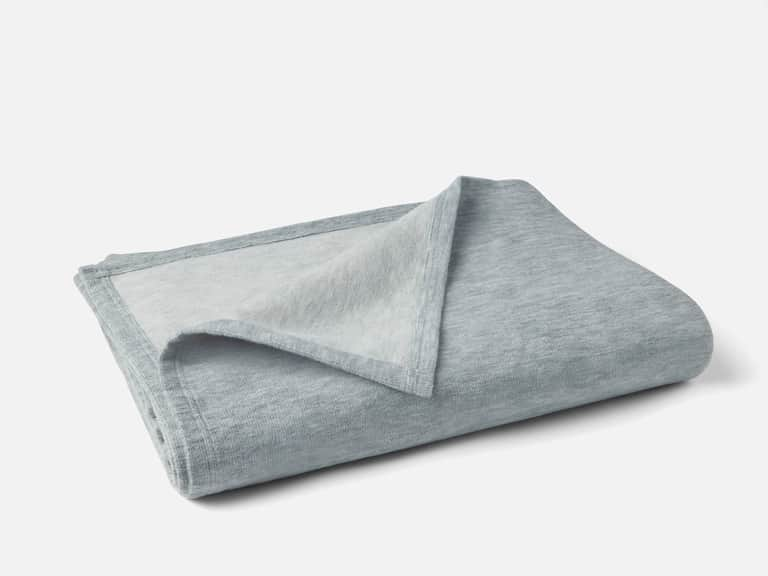
The first impression of an alpaca throw is often the difference between its appearance and its weight. A folded blanket can look plush and generously warm; lifted from a chair, it may feel less burdensome than expected. Alpaca fibers help create an insulating textile, while the finished blanket’s yarn, density, and construction determine how much warmth it holds in practice. “Lightweight” is not a promise of coolness, just as “warm” is not a promise of heaviness.
This is where the throw becomes particularly useful as an everyday object. On a sofa, it can offer a layer for a drafty evening without requiring the full ceremony of changing the room’s bedding. At the foot of a bed, it can add a little extra warmth within reach. Draped over an armchair, it becomes part of the room’s informal arrangement: not quite decoration, not quite equipment, but something that is expected to do both jobs with reasonable grace.
The word “breathable” is often applied broadly to natural fibers. It can suggest that a fabric allows some movement of air and moisture, but it should not be read as a guarantee that every sleeper will feel comfortable at every temperature. Room conditions, layering, the thickness of the throw, and a person’s own heat preferences all matter. Alpaca’s appeal is better understood as a combination of insulating potential and a relatively light feel, not as a universal thermostat.
Softness, drape, and the small mechanics of comfort
Softness is not simply a matter of being fluffy. A textile can feel soft because its fibers are fine, because its surface has been finished to feel smooth, or because its structure gives slightly when handled. The DownTown Company throw’s product description emphasizes exceptional softness and a lightweight, insulating character. Its fringe adds a visible finish, while the woven construction gives the blanket enough body to hang over a chair or settle across the lap.
Drape is the quieter part of the pleasure. A stiff throw tends to stay where it is put, like a folded map; a more pliant one follows the contours of a seat or person. Alpaca fiber can contribute to a fluid hand, though the final drape depends on the yarn and weave as well as the raw material. In use, the distinction is easy to notice. A blanket that falls naturally over the shoulders is more likely to be reached for than one that must be repeatedly rearranged.
The company’s DownTown Company baby alpaca throw measures 50 by 70 inches, a size that suits many sofa and chair uses and can provide a generous lap covering. It is available in several colors, including Charcoal, Walnut, Light Grey, Sea Glass, Burgundy, Blue, and Paprika, according to the supplied product information. Color is not a fiber property, but it has an effect on how often a throw is used: a shade that works with a room tends to live within easy reach rather than in a closet.
A natural fiber is not a care-free fiber
The less romantic part of choosing a natural-fiber throw arrives at laundry time. The DownTown Company description recommends dry cleaning. That instruction deserves to be treated as part of the object, not an inconvenient footnote. A blanket that is used every evening will eventually meet crumbs, spills, household dust, and the ordinary traces of being lived with. If frequent home washing is important to you, a dry-clean-only throw may demand more planning than a machine-washable cotton blanket.
Care labels are not generic suggestions. Different fibers react differently to water, heat, agitation, and detergents, and a textile’s construction can be as important as its material. A blanket can shrink, distort, felt, lose its finish, or become uneven if it is cleaned in a way its maker does not recommend. With alpaca, the safest everyday habit is to follow the specific care guidance provided for the piece, rather than assuming that a method suitable for another wool or a cotton throw will work just as well.
Between cleanings, sensible handling can reduce the need for intervention. Fold the throw loosely when it is not in use. Air it out in a clean, sheltered place when it needs refreshing, avoiding prolonged harsh sunlight. Attend to a spill promptly by blotting rather than rubbing, and check the care instructions before applying a stain treatment. If the throw has fringe, avoid pulling at loose threads; fringe is a finish, not a handle. When the blanket is stored for a season, make sure it is clean and completely dry, and use a clean, breathable storage arrangement that helps protect it from dust and pests.
These are general textile habits, not a replacement for the maker’s directions. If the label is missing or a stain is difficult, a cleaner experienced with delicate natural fibers is a more prudent choice than experimenting at home. The point is not that alpaca requires elaborate rituals. It is that a beautiful fiber can have specific limits, and knowing them early makes ownership easier.
Choosing a throw for the way you actually live
A material comparison is most useful when it begins with a routine. Someone who wants a throw to accompany nightly television, weekend reading, and the occasional snack may value straightforward laundering above all else. Someone who wants a soft, insulating accent for a bedroom or a favorite chair may be willing to accept more careful maintenance in exchange for the feel and appearance of alpaca. Neither preference is more sophisticated. They describe different households.
Before choosing, consider a few practical questions:
- How will it be used? A lap blanket, a bed layer, and a decorative throw face different kinds of wear.
- How much warmth do you want? Fiber, weave, and weight all matter; “natural” does not automatically mean suitable for every season.
- What care can you manage? Dry cleaning is a real recurring consideration, particularly for a frequently used blanket.
- How does the texture feel to you? If possible, evaluate the fabric by touch. Descriptions such as soft or luxurious cannot predict everyone’s response.
- Is the size practical? A 50-by-70-inch throw works well for many personal and sofa uses, but will not function like a full bed blanket.
- What is known about sourcing? Look for specific information about fiber content and origin, and distinguish that from broader environmental claims.
It is also worth separating fiber names from performance promises. Alpaca can offer a soft, warm feel, but no blanket can guarantee that a particular person will sleep better, remain comfortable at any temperature, or never feel irritation. A natural fiber is not automatically hypoallergenic, and “natural” does not by itself establish how a product was produced or what impacts its production had. Reliable descriptions explain what is known—composition, construction, care, and origin—without asking a reader to treat those facts as proof of everything else.
Alpaca alongside other blanket materials
Thinking about alternatives can make alpaca’s particular strengths clearer. Cotton blankets are often chosen for their familiar feel and, depending on construction and care instructions, the convenience of home laundering. Wool is prized for warmth and comes in many textures and weights; the experience varies considerably from one wool blanket to another. Alpaca occupies a distinctive place for people drawn to a soft hand and insulating warmth in a throw that is described as lightweight. These are tendencies, not rigid rules: a dense cotton weave can feel substantial, and a finely made wool textile can be light.
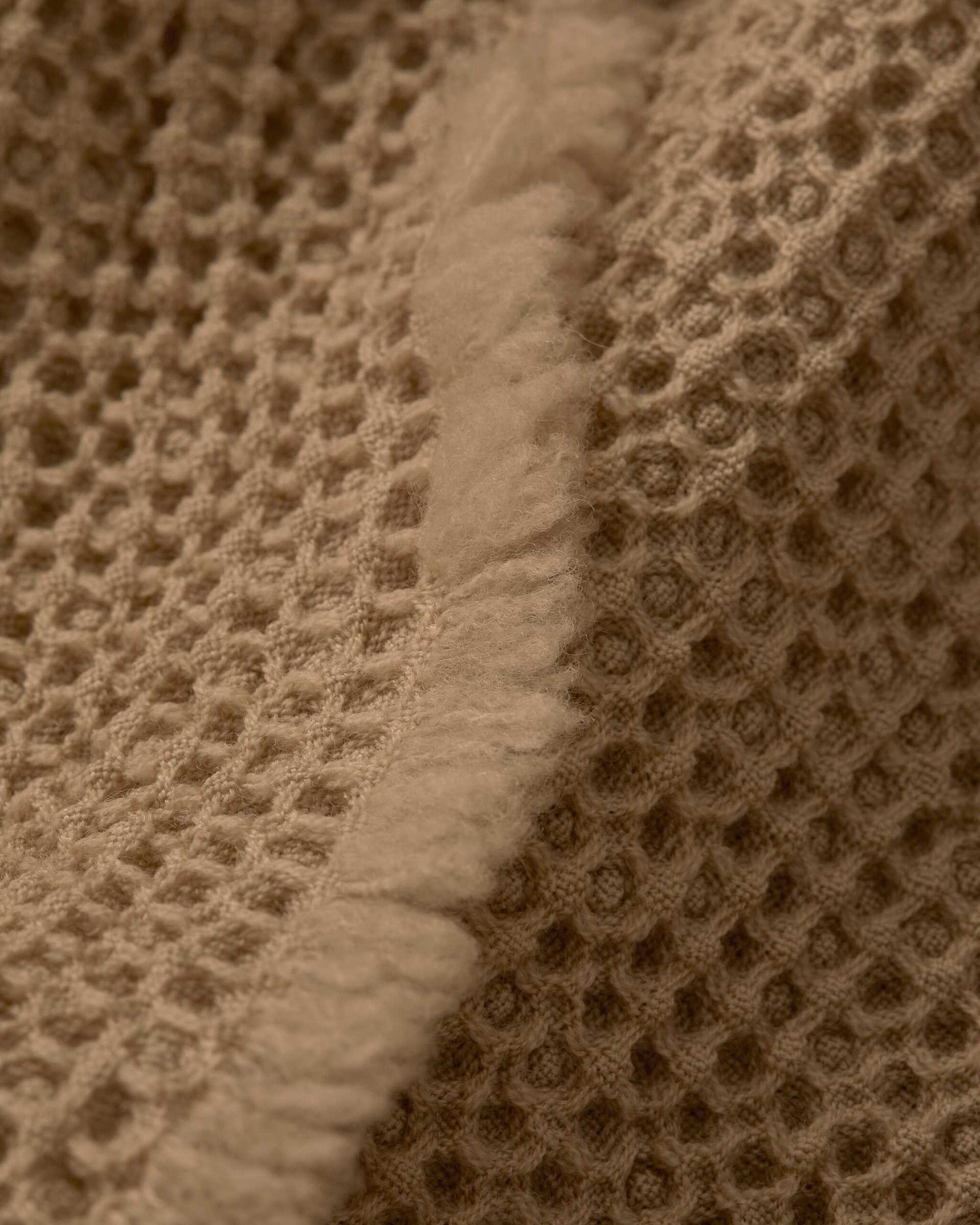
The construction can sometimes matter as much as the fiber. A waffle weave has raised cells and a three-dimensional surface; a brushed blanket has a softer, more raised finish; a smooth weave may feel cooler or more restrained. For comparison, the Nid Blanket is described as pure wool in a waffle weave, with a compact, elastic texture and a warm but light feel. It is not an alpaca throw, and its materials and construction are different, but it illustrates a useful point: warmth and lightness are not exclusive to one fiber. The whole textile—not its ingredient list alone—creates the hand.
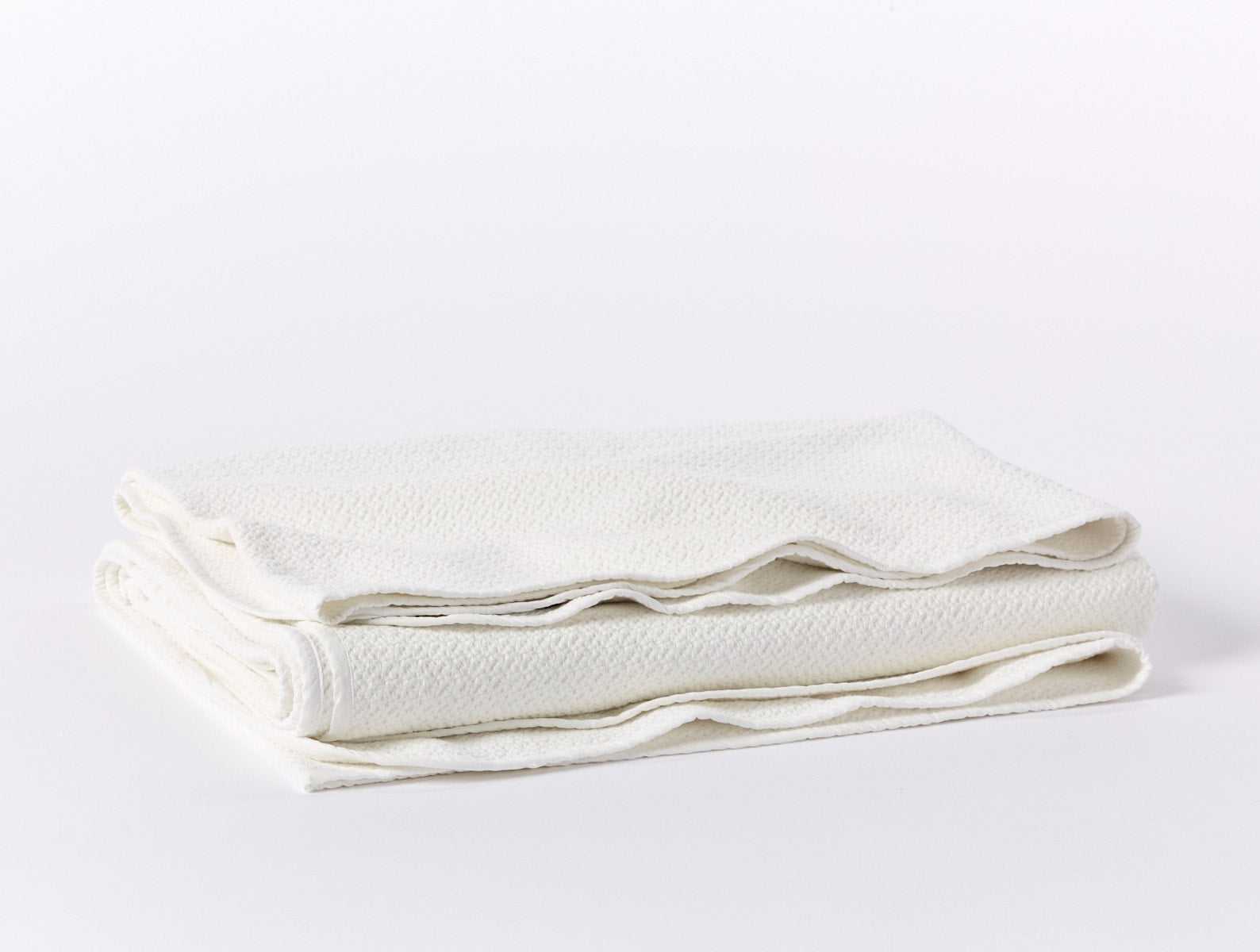
A cotton option can make a different kind of sense for a home where easy laundering takes precedence. The Full Circle Recycled Cotton Blanket, for example, is described as a blend of 52 percent recycled cotton and 48 percent organic cotton, woven in Germany with a brushed finish. Its care information specifies machine washing cold and tumble drying low. That contrast does not make it a substitute in every respect: it has another fiber profile, another surface, and another character. It simply makes clear why care instructions belong in a materials comparison from the start.
Comfort has a maintenance schedule
There is a tendency to think of comfort as something that begins when a blanket is unfolded. In practice, it begins earlier, with the decision about what kind of care a household can sustain. A throw that is exquisite but permanently kept out of reach for fear of damage is offering a rather theoretical comfort. Conversely, a practical blanket that is used constantly may become beloved not because it is rare, but because it is dependable.
The DownTown Company baby alpaca throw is most appealing to readers who want a soft, insulating layer with an elegant drape and are comfortable following dry-clean-only guidance. Its 100 percent alpaca composition, 50-by-70-inch format, fringe, and stated Peruvian origin provide a clear outline of what the product is. They also help a prospective owner ask the right questions: whether the size suits the room, whether the tactile quality is appealing, and whether the cleaning routine is acceptable.
A good throw does not need to be the warmest, softest, or most expensive blanket in the house. It needs to make sense in the life around it. Alpaca fiber shapes the DownTown Company throw by combining a light feel with an insulating purpose and a soft, pliant character. Its care requirements temper that appeal with a practical consideration. Taken together, these details offer a more useful picture than any single adjective could: a natural-fiber textile designed for warmth and drape, best appreciated when its maintenance is understood as part of its comfort.
The takeaway
When comparing natural-fiber blankets, begin with the feel you want, then look at construction, dimensions, origin, and cleaning instructions. “Baby alpaca” describes a fiber grade, not an infant-use designation. Alpaca can provide a soft, warm layer without the bulky impression some blankets have, but the finished textile’s weave and weight influence how it behaves. For the DownTown Company throw, dry-clean-only care is central to the decision—not a detail to discover after the first spill.
The best blanket is often the one that quietly earns its place: close enough to reach, comfortable enough to use, and suited to the small habits that make a room feel inhabited. Fiber matters because it shapes those experiences. So does the way we care for it.