Blankets have a way of making themselves indispensable without announcing the fact. They are folded at the end of a bed, draped over an armchair, or discovered midway through an evening when the room has grown colder than expected. The best ones do not demand much attention. They simply make the difference between feeling chilled and feeling settled. A cotton thermal blanket, particularly one made in a waffle weave, achieves this with a combination of texture and restraint.
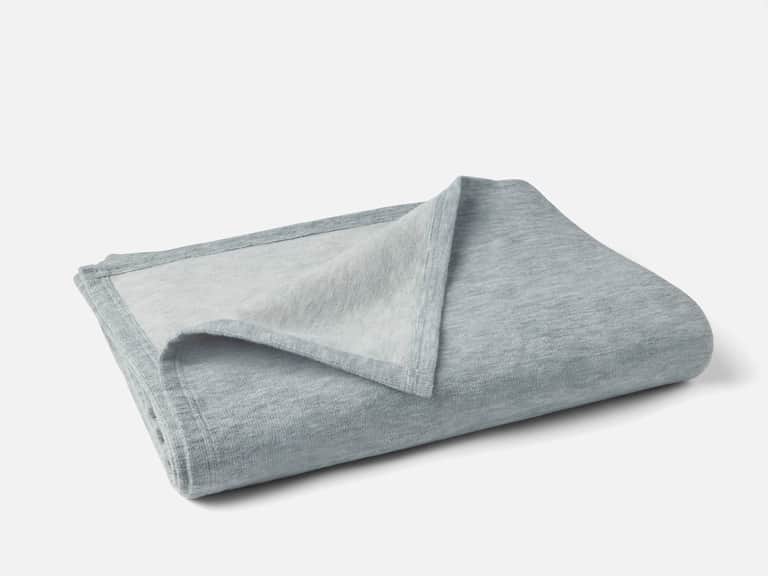
The Kingston blanket is a useful example. Its description is concise: pure cotton, thermal waffle construction, pre-shrunk fabric, and a design intended to retain its generous size. It is woven in Portugal, with care guidance that recommends a cold, gentle wash, no bleach or fabric softener, and low heat when tumble drying. Each detail is small on its own. Taken together, they tell a larger story about how a blanket works, what its texture is doing, and how ordinary laundering can either preserve or unsettle it.
What a waffle weave actually does
The name describes the cloth’s surface, not its ingredients. In a waffle weave, interlacing yarns form a pattern of raised ridges and recessed pockets, producing a grid that resembles the familiar breakfast food. That comparison is less culinary than practical: the relief gives the fabric dimension. A plain weave tends to present a relatively even surface; waffle cloth rises and dips, creating a more varied landscape against the skin and through the air around it.
Those pockets are not little sealed chambers, and the weave does not trap heat in quite the way a thick insulated filling would. Rather, the structure creates space and texture within a comparatively light textile. Raised sections touch the body while recessed areas contribute to the cloth’s loft. The result can feel warm without being especially heavy, and airy without feeling insubstantial. That balance explains why waffle blankets are often described as thermal: they offer a layer of comfort while leaving room for air to circulate.
The word “thermal” is sometimes taken to mean that a blanket supplies a fixed amount of warmth, as though the adjective were a thermostat setting. It does not. A blanket’s performance depends on more than its name. Fiber type, yarn thickness, density, finishing, room temperature, and the other layers on the bed all matter. A cotton waffle layer may suit a cool bedroom or a mild season particularly well; in deep winter, it may work best beneath a heavier blanket or duvet. In warm weather, it can serve as a breathable cover on its own, depending on the sleeper and the room.
Cotton: familiar, capable, and not magic
Cotton is widely used in bedding because it is soft, comfortable against the skin, and able to take up moisture. It also responds to laundering in a way most households understand, though familiarity should not be mistaken for invulnerability. Cotton can shrink, crease, or change in hand if exposed to unsuitable temperatures or rough treatment. In a textured construction, changes may be especially noticeable: the relationship between raised and recessed areas is part of what gives the cloth its character.
The Kingston’s use of cotton makes the fabric’s structure easy to appreciate. The fiber itself is not supplying unusual insulation; the weave gives the blanket much of its distinctive surface and visual depth. That separation is useful when comparing textiles. Two blankets may both be cotton but feel quite different because they use different yarns, densities, and structures. A smooth, closely woven cotton blanket offers a different experience from a lofty waffle weave, just as a brushed flannel sheet feels different from crisp percale despite sharing a fiber family.
Weight matters, too, but it can be misleading when considered alone. A dense blanket may feel substantial and cover well, while a lighter, loftier weave may provide a different kind of comfort. The meaningful question is not simply “How heavy is it?” but “How does it behave in the room where I plan to use it?” Someone who sleeps warm may value airflow more than bulk. A person who likes a tucked-in, enveloping bed may prefer to use the waffle layer in combination with other bedding. The same blanket can be a top layer in one season and an in-between layer in another.
Texture as function, not decoration
Waffle cloth is often chosen for its pleasing surface, but the texture is not merely ornamental. The grid changes how the fabric drapes, how it rests against the body, and how it looks when folded or spread across a bed. Light falls unevenly across the raised squares and hollows, so even a solid color acquires a little visual movement. On a bed made from smooth sheets and a flat duvet, that texture can make the arrangement feel less like a stack of rectangles and more like a composed surface.
In use, the relief also makes the cloth feel distinct from a flat woven cover. Some people enjoy the gentle irregularity; others prefer a smooth hand. Neither preference is a verdict on quality. It is a reminder that textiles are encountered by touch as much as by sight. A blanket that looks beautiful in a photograph may not suit someone who wants a cool, sleek surface, while a simple waffle weave may become the household favorite precisely because it feels comfortably tactile.
The texture also has practical implications for care. Raised structures can be vulnerable to distortion if the fabric is stretched while wet or subjected to unnecessary heat. The waffle pattern is part of the blanket’s identity, and preserving the fabric’s dimensions helps preserve the pattern’s proportions. This is why gentle handling is not fussy housekeeping. It is a way of keeping the construction doing what it was designed to do.
Pre-shrunk does not mean shrink-proof
Pre-shrinking is a reassuring phrase, but it should be read accurately. It indicates that the fabric has been treated to reduce the amount of shrinkage likely to occur later. It does not promise that the blanket cannot change size under any circumstances. Cotton remains responsive to heat, moisture, agitation, and the way it is dried. A pre-shrunk blanket is better understood as one that has had some of its dimensional change anticipated and managed, not one that has acquired immunity to the laundry room.
That distinction matters with a blanket intended to fit generously over a mattress or sofa. A few changes in dimension can alter the way it falls at the sides of a bed or rests over an armchair. The best approach is unglamorous: follow the care label, use the recommended water temperature, avoid aggressive drying, and do not assume that the highest heat setting is a harmless shortcut. A little patience can help retain the blanket’s shape and its characteristic surface.
A sensible routine for washing cotton waffle bedding
Laundry advice can become elaborate enough to suggest that a blanket requires a personal attendant. Usually it does not. For the Kingston, the stated guidance is straightforward: machine wash cold on a gentle cycle; do not use bleach or fabric softener; wash dark colors separately; and tumble dry on low heat to minimize shrinkage. The care label on the blanket remains the final authority, since instructions can vary among fabrics and production runs.
- Check before washing. Look over the label and any specific guidance supplied with the blanket. If the instructions differ from general advice, follow the instructions for that item.
- Choose a gentle cycle. A cold, gentle wash helps limit the combination of heat and mechanical stress that can affect cotton dimensions and texture.
- Skip bleach. The Kingston’s care guidance says not to use bleach. Beyond the possibility of color change, harsh treatments are rarely necessary for routine cleaning.
- Leave out fabric softener when specified. Softener may seem like the obvious way to make a blanket feel softer, but the manufacturer’s instructions should take precedence. The cloth’s feel is shaped by its construction; extra products are not automatically an improvement.
- Use low heat. High temperatures can contribute to shrinkage. Low-temperature drying offers a more cautious route, particularly for textured cotton.
- Do not crowd the machine. A blanket needs enough room to move through the wash and rinse. Overloading can make cleaning less effective and place avoidable strain on the fabric.
- Remove it when dry. Prompt removal can reduce creasing and gives the fabric a chance to settle rather than remaining compressed in the drum.
These measures are not a guarantee against every change. Washing and drying involve variables—machine settings, water conditions, detergent, load size, and the blanket’s previous history—that cannot all be controlled. The point is to avoid adding unnecessary stress. A cold gentle wash and low heat are modest choices, and modest choices are often what durable household textiles need.
Why softener is not always the answer
There is a certain domestic optimism in fabric softener. A person opens the bottle believing that softness is a simple matter of adding something fragrant to the rinse. Yet a blanket’s surface is not a blank slate. Its touch comes from fiber, yarn, weave, and finish. A product that leaves a coating can change that surface rather than improve it, and some care labels advise against it for precisely that reason.
With a waffle weave, the texture is an essential feature, not a defect waiting to be smoothed away. Following the Kingston’s no-softener instruction lets the cotton retain the hand and structure intended for the fabric. If the blanket seems less soft after washing, first consider whether it has been thoroughly rinsed and dried according to its label. A product added in the name of softness is not necessarily the best remedy.
How to use a thermal layer through the seasons
A useful blanket does not have to be assigned to one month of the year. The Kingston’s breathable, textured cotton construction makes it a plausible layer in changing conditions, though comfort is personal and depends on the room. On a cool spring night, it may be enough on its own. In summer, it can replace a heavier cover for someone who likes a light layer. When colder weather arrives, it can sit between the sheet and a duvet or be folded within reach for an extra measure of warmth.
Layering works best when each piece has a distinct job. A sheet forms the immediate sleeping surface; a waffle blanket adds a light-to-moderate layer with texture; a heavier cover supplies more insulation. When the room warms, one layer can be removed without remaking the entire bed. This is less a design trick than a small act of negotiation with the weather, which rarely asks permission before changing.
The same versatility applies outside the bedroom. A cotton thermal blanket can be folded over the back of a sofa or laid across the foot of a guest bed. Its texture adds visual interest, while its relatively simple material composition makes it familiar to care for. A blanket should be useful enough to leave within reach, not so precious that everyone feels obliged to admire it from a distance.
Reading a blanket beyond its name
Names are useful shorthand, but they do not replace specifications. When assessing a thermal blanket, start with the fiber content, then look at the weave, dimensions, care requirements, and any information about pre-shrinking or finishing. “Cotton” tells you what the fiber is; “waffle” tells you something about construction; “thermal” suggests the intended role. Together, those words offer a beginning, not a complete forecast of how the blanket will feel in your home.
If a blanket is described as pre-shrunk, note the qualification. If the care instructions prohibit bleach or fabric softener, treat that as part of the design rather than as fine print to be ignored. If dimensions are important—for example, if you want generous coverage on a particular mattress—consider how the blanket’s size will relate to the bed and how laundering could affect its drape. The more accurately a textile is understood, the less likely it is to disappoint through ordinary use.
Claims about certifications, sourcing, and production can also help readers make informed choices when they are provided. They should be considered alongside the details of construction and care, not as substitutes for them. A responsible fiber story does not explain whether a blanket will be too warm for a particular sleeper; a clever weave does not, by itself, establish how a textile was produced. Good evaluation keeps practical performance and broader values in view at the same time.
The quiet virtue of a well-kept layer
The Kingston thermal blanket offers a lesson in how everyday bedding earns its place. Cotton supplies a familiar, approachable fiber. The waffle weave introduces texture, air, and a particular kind of light warmth. Pre-shrinking helps manage dimensional change before the blanket reaches the home, while the care instructions give the owner a sensible way to preserve its shape. None of these features is dramatic. Together, they make a textile that can move easily between seasons and rooms.
Care, in this case, is less about preserving an immaculate object than about allowing a useful one to remain useful. A blanket can be washed, folded, lent to a guest, and taken back to the bed without ceremony. The gentle cycle and low heat are not rituals. They are practical ways of respecting the material’s limits. Over time, the real test of a good blanket is not whether it remains untouched, but whether it continues to be reached for.
A waffle weave gives cotton a little architecture. Its ridges and pockets make a surface that is warmer in feeling than its modest weight might suggest, yet open enough to suit a range of conditions. Follow the label, keep heat low, and let the texture do its work. The result is not a complicated system of bedding. It is a dependable layer—quiet, breathable, and ready when the room turns cool.